The Eatwell Guide shows the balance of foods to aim for over a day or week. It’s a flexible framework rather than a strict plan.
Good to know first
- Fruit and vegetables should make up just over a third of what you eat.
- Starchy foods, ideally wholegrain, should make up just over another third.
- Include some protein foods and some dairy or alternatives, plus small amounts of unsaturated oils.
- Foods high in fat, salt and sugar sit outside the main guide and are best eaten less often and in small amounts.
The Eatwell Guide is the UK’s official model of a balanced diet. It shows the proportions of food groups to aim for overall, not at every meal.
The main food groups
| Group | Share of what you eat | Examples |
|---|---|---|
| Fruit and vegetables | Just over a third | Fresh, frozen, tinned, dried |
| Starchy carbohydrates | Just over a third | Wholegrain bread, rice, pasta, potatoes with skins |
| Protein | Smaller portion | Beans, pulses, fish, eggs, meat |
| Dairy and alternatives | Smaller portion | Milk, cheese, yoghurt, fortified alternatives |
| Oils and spreads | Small amounts | Unsaturated oils, such as olive or rapeseed |
Putting it on a plate
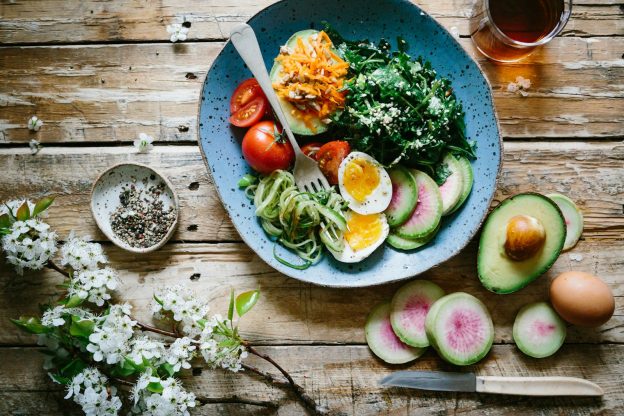
- Fill around a third of your plate with vegetables or salad.
- Add a wholegrain or starchy food for another third.
- Include a protein, such as beans, fish or eggs.
- Add a portion of dairy or an alternative during the day.
Easy swap
Aim for at least two portions of fish a week, one of them oily, such as salmon or mackerel. Choose beans and pulses more often as a source of protein and fibre.
Foods to have less often
Foods high in fat, salt and sugar, such as cakes, biscuits, crisps and sugary drinks, aren’t part of the main guide. They can still be enjoyed occasionally and in small amounts.
Good to remember
The Eatwell Guide doesn’t apply to children under 2, who have different needs. If you have a health condition, ask your GP or a registered dietitian for personalised advice.
Using it day to day
Think of the guide as a balance to aim for across the week. Our guides to 5 A Day, fibre and traffic light labels help you put it into practice.
Your food questions
Does every meal need to match the Eatwell Guide?
No. The balance applies across a day or week, so individual meals can vary.
Is the Eatwell Guide for everyone?
It applies to most people from age 2. People with medical conditions or special dietary needs should get tailored advice from a GP or dietitian.
Can vegetarians and vegans follow it?
Yes. Beans, pulses, tofu and other plant proteins fit the protein group, and fortified dairy alternatives fit the dairy group.
This article is general information about healthy eating, not medical advice. If you have a health condition, are pregnant, have or have had an eating disorder, or follow a special diet, speak to your GP or a registered dietitian before making changes. Figures follow NHS guidance for the UK.