Most of the salt we eat is already in food when we buy it. Knowing where to look makes cutting down easier.
Good to know first
- Adults should eat no more than 6g of salt a day, about a level teaspoon.
- Children need less, depending on their age.
- Around three-quarters of the salt we eat is already in everyday foods.
- Eating too much salt can raise blood pressure, increasing the risk of heart disease and stroke.
Salt adds flavour, but too much of it can raise blood pressure over time. The good news is that cutting down usually gets easier as your taste adjusts.
Daily maximums
| Age | Maximum salt a day |
|---|---|
| Adults and children 11+ | 6g |
| Children 7 to 10 | 5g |
| Children 4 to 6 | 3g |
| Children 1 to 3 | 2g |
Where salt comes from
Around three-quarters of the salt we eat is already in the food we buy. Common sources:
- bread and breakfast cereals
- ready meals, pizza and takeaways
- processed meats, such as bacon, ham and sausages
- cheese
- sauces, gravies and stock cubes
- crisps and salted snacks
Reading labels
On food labels, more than 1.5g of salt per 100g is high and 0.3g or less per 100g is low. Our guide to traffic light labels explains the colours.
Easy swap
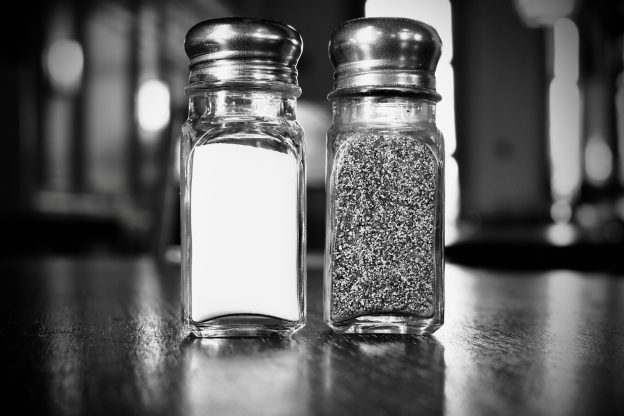
Taste food before adding salt at the table, and season with herbs, spices, garlic, lemon or black pepper instead.
Easy ways to cut down
- Compare labels and choose lower-salt versions of everyday foods.
- Cook from scratch more often, so you control the salt.
- Choose tinned vegetables and pulses in water, not brine.
- Go easy on stock cubes, soy sauce and ready-made sauces.
Good to remember
If you have high blood pressure or a heart or kidney condition, ask your GP or a dietitian for advice tailored to you.
Getting used to less salt
Your taste buds adapt within a few weeks of eating less salt. Combine these changes with our guides to free sugars and batch cooking, which make home cooking easier.
Your food questions
How much salt should children have?
Children aged 1 to 3 should have no more than 2g a day, 4 to 6 no more than 3g, 7 to 10 no more than 5g, and 11 and over no more than 6g.
Is sea salt or rock salt healthier?
No. They contain the same amount of sodium as table salt, so they count in the same way.
What’s the difference between salt and sodium?
Salt is sodium chloride. Some labels show sodium; multiply sodium by 2.5 to get the salt equivalent.
This article is general information about healthy eating, not medical advice. If you have a health condition, are pregnant, have or have had an eating disorder, or follow a special diet, speak to your GP or a registered dietitian before making changes. Figures follow NHS guidance for the UK.